We invent, we care, we deliver.
Businesses today are looking for faster and more cost-effective ways to launch mobile applications without investing years in building software from scratch. Whether you run a digital agency, software company, startup, or established enterprise, offering mobile applications under your own brand can help you expand your services, reach new customers, and generate additional revenue. White-label mobile app development provides a practical way to achieve these goals.
Custom Native Architecture
Scalable & Reusable
Complete Control & Analytics
With a white-label solution, a development company builds an application that another business can customize, brand, and offer to its customers under its own name. This approach allows businesses to focus on sales, customer relationships, and brand growth while reducing the time and resources required to develop an application independently.
HybridPlus Infotech helps businesses explore customized software and mobile application solutions based on their business objectives. As a white-label mobile app development company, HybridPlus Infotech can help businesses plan and develop branded mobile applications with features such as user authentication, payment integration, push notifications, dashboards, API integrations, and administrative controls.
Whether you want to expand your agency's service portfolio, launch a branded application for your customers, or establish a new software business, white-label mobile app development can help you bring your ideas to market with a structured development approach.
White-label mobile app development is a software development model in which an application is created by one company and made available to another business for branding and commercial use, subject to the agreed licensing and ownership terms.
The purchasing business can customize elements such as the application name, logo, colors, interface, and selected functionality to align with its brand identity. Depending on the agreement, the solution may also support customer-specific configurations, integrations, and additional features.
For example, a digital marketing agency may want to offer mobile applications to its clients without hiring an entire in-house development team. By partnering with a white-label development provider, the agency can offer branded application solutions while the development partner handles the agreed technical work.
White-label applications can serve industries such as retail, healthcare, education, food delivery, fitness, real estate, and professional services. The exact level of customization, source-code access, exclusivity, intellectual property rights, and ongoing support depends on the commercial agreement between the businesses.
White-label development can help businesses expand their digital offerings without building every application component from the beginning.
Developing an application from scratch requires planning, design, coding, testing, and deployment. A white-label solution can reduce development time by reusing an existing foundation. Businesses can focus on branding, configuration, and essential customization instead of rebuilding common features. The actual launch timeline depends on the application's complexity, required integrations, and approval processes.
Building and maintaining an in-house development team requires investment in recruitment, salaries, infrastructure, software tools, and training. White-label development can reduce some of these costs by allowing businesses to work with an established development partner. Reusable components can also reduce duplicated development effort. However, businesses should evaluate licensing fees, customization charges, hosting, maintenance, and other recurring expenses before selecting a solution.
Digital agencies, IT consultants, and software resellers can add mobile app development to their existing service offerings. This allows them to provide additional value to their customers without independently managing every aspect of software engineering. Businesses can potentially offer branded applications for multiple industries, depending on the flexibility of the underlying platform.
White-label applications can be customized with your business name, logo, colors, and selected design elements. This creates a branded experience for customers and helps maintain consistency across your website, marketing materials, and mobile application. Branding options and customization limits should be confirmed before development begins.
As demand increases, businesses may need to serve more clients or introduce additional application features. A well-designed white-label solution can provide a reusable foundation for new projects, helping businesses manage growth more efficiently. Scalability still depends on the application's architecture, infrastructure, licensing terms, and development partner's capacity.
HybridPlus Infotech can help businesses plan white-label mobile application solutions according to their target market, customer requirements, and commercial objectives.
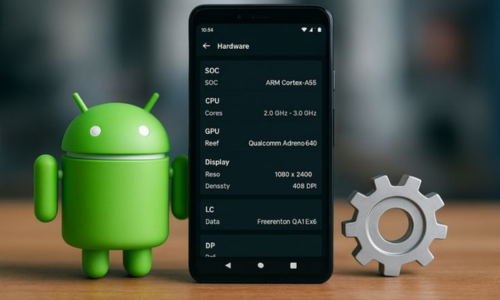
Android applications help businesses reach users across a broad range of mobile devices. A white-label Android solution can include customized branding, user registration, product catalogs, dashboards, notifications, payment functionality, and backend integration. The final feature set can be adapted to the business model and target audience.
Businesses serving Apple users can consider white-label iOS applications for their products and services. Depending on the project requirements, the application can include user authentication, personalized interfaces, booking functionality, payment integration, and account management. App Store distribution requires compliance with Apple's applicable policies and account requirements.
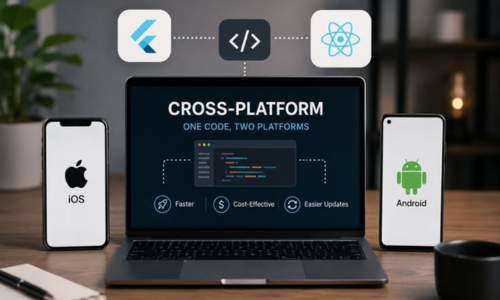
Cross-platform development can help businesses launch applications for Android and iOS using a shared codebase. Technologies such as Flutter and React Native may be suitable depending on the application's functionality, performance requirements, and integration needs. This approach can reduce duplicated development effort, although some platform-specific implementation may still be necessary.
Retailers and agencies can use white-label e-commerce applications to offer branded shopping experiences. Common features include product catalogs, search and filters, shopping carts, payment gateways, order management, customer accounts, discount coupons, and delivery tracking. The solution can be configured according to the client's product categories, fulfillment process, and business model.
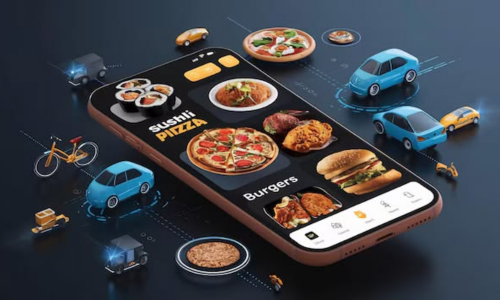
Food delivery applications can connect customers, restaurants, and delivery partners through a shared digital platform. Depending on the requirements, the solution may include restaurant listings, menus, order placement, payment processing, delivery tracking, restaurant dashboards, and administrative controls. This model can be useful for agencies or businesses that want to offer food delivery technology to local markets.
On-demand applications connect customers with service providers for activities such as home services, transportation, professional bookings, and local deliveries. A white-label solution can include customer and service-provider profiles, booking management, notifications, location-based features, ratings, and payment integration. The application can be adapted to the specific workflow of the service business.
Healthcare businesses can use branded applications to support appointment booking, patient communication, reminders, and access to relevant service information. Depending on the intended use, healthcare applications may require additional privacy, security, licensing, and regulatory considerations. The functionality should be planned around the applicable requirements of the market in which the application will operate.
A successful white-label application should combine consistent branding with reliable functionality and an intuitive user experience.
Supports logos, color schemes, typography, splash screens, and layout branding.
Email, phone number, social sign-in, and security access controls.
Central management interface for content, users, orders, and operational settings.
Confirmations, transaction history, refunds, and platform billing compliance.
Configurable order updates, promotional messaging, and consent settings.
Connects smoothly with CRM, ERP, payment gateways, and inventory tools.
Detailed insights into app usage, customer engagement, and performance metrics.
Encrypted communication, role-based access, audit logs, and backups.
A structured process helps businesses establish clear expectations and prepare their launch applications.
Understanding business model, target audience, branding rules, app features, and core priorities.
Selecting Android, iOS, or cross-platform stack; defining licensing and code access limits.
Adapting interface with logos and colors; creating wireframes to review screen navigation.
Configuring agreed features, API integrations, database workflows, and custom adjustments.
Rigorous functional, security, performance, device compatibility, and payment checks.
Deployment setup to cloud servers and publishing under relevant developer app store accounts.
Bug fixes, security updates, OS compatibility, and ongoing SLA technical support.
The cost of white-label mobile app development depends on whether you are licensing an existing platform, customizing a reusable application, or commissioning a more extensive solution. The following figures are illustrative estimates for projects in India, not fixed quotations.
Indicative entry level setup
Standard commercial solution
Multi-feature application
Multi-client platform
To receive an accurate estimate, define your target customers, essential features, branding requirements, expected client volume, and ownership expectations before finalizing the project.
HybridPlus Infotech helps businesses explore customized software and mobile application solutions that align with their commercial objectives. For organizations looking to introduce branded applications, the right development approach should balance speed, flexibility, technical reliability, and long-term business requirements.
HybridPlus Infotech can help you plan white-label mobile applications with features such as custom branding, user management, dashboards, payment integration, push notifications, and third-party connectivity according to the agreed project scope. The solution can be evaluated for Android, iOS, or cross-platform delivery based on your target audience and budget.
A structured development process can cover requirement analysis, interface design, customization, testing, deployment preparation, and ongoing technical support. Businesses can also discuss how the application will be licensed, maintained, and adapted for different clients.
Agencies can expand their service portfolio by offering branded mobile applications alongside digital marketing, branding, and website services.
Software businesses can use white-label solutions to serve customers who need mobile applications without independently developing every reusable component.
Entrepreneurs can explore a faster route to launching a digital product, provided the chosen solution offers the flexibility and commercial rights required.
Retailers can create branded applications for product discovery, shopping, loyalty programs, customer engagement, and order management.
Consultants can add mobile application solutions to their service offerings through a solid development partnership.
Franchise businesses can consider centralized application management with location-specific branding, services, or settings.
Find quick, direct answers regarding white-label mobile app development.