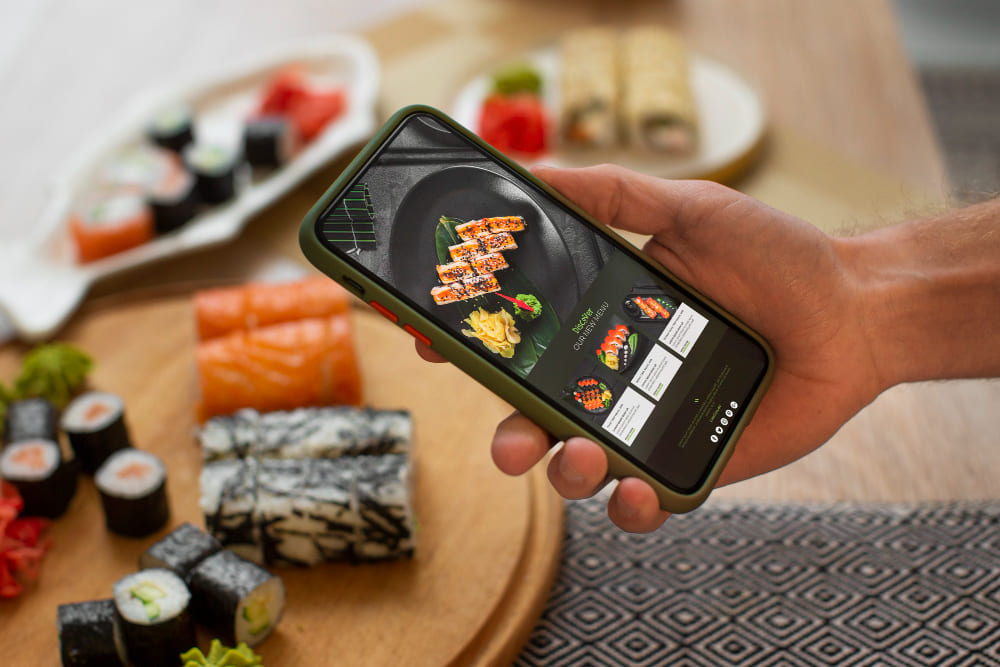
Food delivery has become an essential part of modern consumer lifestyles. Customers increasingly prefer ordering meals through mobile apps because they can browse restaurants, compare menus, place orders, make online payments, and track deliveries from their smartphones. Platforms like Zomato have transformed the food delivery industry by connecting customers, restaurants, and delivery partners through a single digital ecosystem.
The average cost to develop an app like Zomato can range from $25,000 to $150,000 or more, depending on the features, technology, UI/UX design, number of applications, integrations, development location, and overall complexity of the platform. A basic food delivery app may cost less, while a feature-rich platform with advanced analytics, AI recommendations, real-time tracking, multiple payment gateways, restaurant management, and sophisticated admin controls can require a significantly larger investment.
What Is a Zomato-Like Food Delivery App?
A Zomato-like application is more than a simple food ordering app. It is a complete food delivery ecosystem that connects multiple stakeholders.
A typical platform includes:
- Customer mobile application
- Restaurant/vendor application or dashboard
- Delivery partner application
- Admin panel
- Backend server and database
- Payment gateway integration
- Maps and GPS integration
- Notification system
- Restaurant management tools
- Order and delivery management
Customers can search restaurants, explore menus, customize orders, pay online, receive order updates, and track deliveries. Restaurants can manage menus, accept orders, update preparation status, and monitor sales. Delivery partners can receive delivery requests, navigate to pickup locations, and update delivery status.
Because of these multiple components, developing an app like Zomato requires considerably more work than developing a basic food ordering application.
How Much Does It Cost to Develop an App Like Zomato?
The cost depends heavily on the complexity of your planned application.
|
App Type |
Estimated Development Cost |
|
Basic Food Delivery App |
$25,000 – $45,000 |
|
Medium-Level Food Delivery App |
$45,000 – $80,000 |
|
Advanced Zomato-Like App |
$80,000 – $150,000+ |
|
Enterprise-Level Platform |
$150,000+ |
These are general estimates. The actual price can vary according to your selected features, development team, platform, design requirements, integrations, and business model.
For startups, launching an MVP first can be a practical approach. An MVP can include essential ordering and delivery features without implementing every advanced feature from day one.
Key Features of a Zomato-Like Food Delivery App
A successful food delivery platform requires separate features for customers, restaurants, delivery partners, and administrators.
1. Customer App Features
The customer application is the primary interface for users.
Important features include:
- User registration and login
- Social login
- Location detection
- Restaurant search
- Restaurant listings
- Food categories
- Menu browsing
- Food customization
- Add to cart
- Multiple delivery addresses
- Order placement
- Online payment
- Cash-on-delivery option
- Order history
- Real-time order tracking
- Push notifications
- Ratings and reviews
- Coupons and promotional offers
- Favorites
- Customer support
- Reordering
- Referral and loyalty programs
A natural interface is particularly important because customers expect fast navigation and a smooth checkout experience.
2. Restaurant Panel
Restaurants need a dedicated dashboard or application to manage their operations.
Common restaurant-side features include:
- Restaurant registration
- Profile management
- Menu management
- Food item management
- Pricing management
- Image uploads
- Availability management
- Order notifications
- Accept/reject orders
- Order status updates
- Offers and discounts
- Sales reports
- Customer reviews
- Earnings management
Restaurants should be able to update their menu and pricing without depending on the platform administrator.
3. Delivery Partner App
The delivery application helps drivers manage deliveries efficiently.
Important features include:
- Delivery partner registration
- Profile verification
- Online/offline status
- Delivery request notifications
- Order acceptance
- Pickup details
- Customer information
- GPS navigation
- Route optimization
- Real-time location sharing
- Delivery status updates
- Earnings dashboard
- Delivery history
- Ratings
- Support
GPS and real-time tracking are among the more technically demanding components of a food delivery platform.
4. Admin Panel
The admin panel provides complete control over the platform.
Administrators can manage:
- Customers
- Restaurants
- Delivery partners
- Orders
- Payments
- Commissions
- Coupons
- Categories
- Locations
- Reviews
- Promotions
- Disputes
- Notifications
- Reports
- Revenue
- User activity
A powerful admin dashboard can help business owners monitor operations and make data-driven decisions.
Advanced Features for a Zomato-Like App
If you want to compete in a highly competitive food delivery market, advanced functionality can provide additional value.
AI-Based Food Recommendations
AI can analyze customer behavior, previous orders, preferences, and browsing activity to recommend relevant restaurants and dishes.
Real-Time Order Tracking
Customers can track delivery partners on a map and receive updated estimated delivery times.
Multiple Payment Options
Integrating payment gateways allows customers to pay using:
- Credit and debit cards
- UPI
- Digital wallets
- Net banking
- Other regional payment methods
Loyalty and Rewards
A loyalty program can encourage repeat purchases through points, discounts, cashback, and exclusive offers.
Restaurant Advertising
Restaurants can promote their businesses through sponsored listings, banners, and promotional campaigns.
Advanced Analytics
Analytics can provide insights into:
- Total orders
- Revenue
- Customer acquisition
- Repeat customers
- Popular food items
- Restaurant performance
- Delivery performance
- Conversion rates
Factors That Affect the Cost of Developing an App Like Zomato
Several factors determine the overall development budget.
App Platforms
Developing separate native applications for Android and iOS can increase development costs. Cross-platform development can sometimes reduce development time and cost.
UI/UX Design
A basic design is less expensive than a highly customized interface with advanced animations, personalization, and complex user flows.
Number of Applications
A Zomato-style platform usually requires multiple interfaces:
- Customer app
- Restaurant app/panel
- Delivery partner app
- Admin dashboard
Developing all these components increases the overall budget.
Features and Integrations
Features such as GPS tracking, payment gateways, AI recommendations, loyalty systems, analytics, chat, and third-party APIs can increase development complexity.
Backend Architecture
A food delivery platform must support potentially large numbers of users, restaurants, orders, and real-time events. A scalable backend architecture is therefore essential.
Development Team Location
Development rates vary considerably between countries and regions. Companies in North America and Western Europe generally have higher hourly rates than development teams in India and other regions.
Maintenance and Updates
App development does not end after launch. You should also budget for:
- Bug fixing
- Security updates
- Server maintenance
- OS compatibility
- Performance optimization
- New features
- Third-party API updates
Technology Stack for a Zomato-Like App
The technology stack depends on the project's requirements.
A modern application may use:
Frontend: React Native, Flutter, Swift, Kotlin, or other suitable technologies
Backend: Node.js, Laravel, Python, Java, or similar backend technologies
Database: MySQL, PostgreSQL, MongoDB, or other database systems
Cloud: AWS, Google Cloud, Microsoft Azure, or similar infrastructure
Maps: Google Maps Platform or other mapping services
Payments: Stripe, Razorpay, PayPal, or region-specific payment gateways
Notifications: Firebase Cloud Messaging and other notification services
The final technology stack should be selected according to scalability, security, performance, budget, and target markets.
Development Process for a Zomato-Like App
A structured development process helps control both quality and costs.
Step 1: Business and Market Research
Start by identifying your target customers, restaurants, geographical market, competitors, pricing strategy, and monetization model.
Step 2: Feature Planning
Create a detailed feature list for the customer, restaurant, delivery, and admin applications.
Step 3: UI/UX Design
Design wireframes and high-fidelity screens to create an intuitive ordering experience.
Step 4: Backend Development
Develop APIs, databases, authentication, order management, payment processing, restaurant management, delivery workflows, and other backend functionality.
Step 5: Mobile App Development
Build the customer and delivery applications. Restaurant functionality can be delivered through a dedicated app or web dashboard.
Step 6: Third-Party Integrations
Integrate maps, payment gateways, notifications, analytics, SMS, email, and other required services.
Step 7: Testing
Perform functional, usability, security, performance, compatibility, and payment testing.
Step 8: Deployment
After successful testing, publish the applications on the relevant app stores and deploy the backend infrastructure.
Step 9: Maintenance and Improvements
Monitor performance, collect user feedback, fix issues, and continuously improve the application.
Why Consider HybridPlus Infotech for Food Delivery App Development?
HybridPlus Infotech provides custom software and mobile app development solutions for businesses looking to build scalable digital platforms. The company can help transform a food delivery concept into a complete technology solution covering customer applications, restaurant management, delivery partner applications, backend systems, and admin dashboards.
The development approach can be tailored to your business model, target market, budget, and required functionality. From UI/UX design and API development to payment integration, GPS tracking, notifications, and deployment, every component can be planned around your operational requirements.
For businesses planning a Zomato-like platform, HybridPlus Infotech can also support MVP development and future scalability. Instead of investing in unnecessary features at the beginning, businesses can prioritize essential functionality and gradually expand their platform based on customer and restaurant feedback.
Final Thoughts
The cost to develop an app like Zomato can range from approximately $25,000 to $150,000+, depending on the application's complexity, features, platforms, integrations, development team, and scalability requirements.
A successful food delivery application requires much more than a customer-facing mobile app. It needs restaurant management, delivery operations, real-time tracking, secure payments, an admin dashboard, scalable backend infrastructure, and continuous maintenance.
If you are launching a startup, an MVP can be a cost-effective starting point. Once you validate demand and establish your restaurant and customer network, you can gradually add advanced features and expand into new locations.
Working with an experienced food delivery app development company can help you plan the right architecture, prioritize features, manage development costs, and build a platform that can scale with your business.
FAQs
1. How much does it cost to develop an app like Zomato?
The cost can typically range from $25,000 to $150,000 or more. A basic MVP costs less, while an advanced platform with multiple apps, real-time tracking, AI, analytics, payment integrations, and other complex features requires a larger investment.
2. How long does it take to develop a Zomato-like app?
Development can take approximately 4 to 12 months or more, depending on the number of applications, features, integrations, design complexity, testing requirements, and team size.
3. What applications are required for a Zomato-like platform?
A complete platform generally includes a customer app, restaurant application or dashboard, delivery partner app, and admin panel. These components communicate with a centralized backend.
4. Can I develop a food delivery app with a limited budget?
Yes. Start with an MVP containing essential features such as restaurant listings, menus, cart, checkout, payments, order management, delivery management, and basic tracking. Advanced features can be introduced later.
5. How can a Zomato-like app generate revenue?
Common monetization methods include restaurant commissions, delivery fees, advertising, subscription plans, platform fees, and promotional listings. Businesses can combine multiple revenue models.
6. What factors have the biggest impact on development cost?
The biggest factors include feature complexity, number of platforms, UI/UX requirements, number of applications, backend architecture, third-party integrations, development team location, security requirements, and ongoing maintenance.