The food delivery industry has changed significantly with the growth of on-demand mobile applications. Platforms like Just Eat have made it easier for customers to discover restaurants, browse menus, place orders, make payments, and track deliveries from their smartphones. This growing demand has created new opportunities for restaurants, food chains, startups, and entrepreneurs looking to launch their own food delivery platforms.
Building an app like Just Eat involves much more than creating a simple ordering application. A successful platform needs separate functionalities for customers, restaurants, delivery partners, and administrators. It also requires reliable payment integration, real-time order tracking, notifications, restaurant management tools, and a scalable backend.
What Is a Food Delivery App Like Just Eat?
Just Eat is an online food ordering and delivery platform that connects customers with restaurants. Users can search for restaurants, explore menus, select food items, place orders, make payments, and track their deliveries through the platform.
A similar food delivery application can follow a multi-sided marketplace model where different users interact with the platform.
Customer App
The customer application allows users to:
- Create and manage accounts
- Search for nearby restaurants
- Browse menus and food categories
- Add food items to a cart
- Apply discounts and promo codes
- Place orders
- Select payment methods
- Track orders
- Rate restaurants and delivery services
- View previous orders
Restaurant Panel
Restaurants need a dedicated dashboard to manage their operations. Important functions include:
- Restaurant registration
- Menu management
- Food item management
- Order acceptance and rejection
- Order status updates
- Pricing management
- Discount management
- Sales reports
- Customer information
- Restaurant performance analytics
Delivery Partner App
The delivery application helps drivers manage deliveries efficiently. It can include:
- Delivery partner registration
- Profile management
- Order assignment
- Accept/reject delivery requests
- GPS navigation
- Pickup and delivery status
- Earnings tracking
- Delivery history
- Notifications
Admin Dashboard
The administrator controls the entire platform through a web-based dashboard. Admin features may include:
- Customer management
- Restaurant management
- Delivery partner management
- Order management
- Payment monitoring
- Commission management
- Coupon management
- Reviews and ratings
- Reports and analytics
- Content management
How to Build a Food Delivery App Like Just Eat
Developing a food delivery application requires proper planning and a structured development process. The following steps can help you understand the complete development journey.
1. Define Your Business Model
Before starting development, determine how your food delivery platform will generate revenue.
Common food delivery business models include:
- Restaurant commission
- Delivery charges
- Customer service fees
- Restaurant subscription plans
- Featured restaurant listings
- Advertising
- Promotional fees
- Membership programs
For example, you can charge restaurants a percentage of every completed order. You can also provide premium plans for restaurants that want additional visibility on the platform.
2. Identify Your Target Audience
Define who your application is designed for. Your target audience could include:
- Local restaurants
- Food chains
- Customers in a specific city
- College students
- Office employees
- Families
- Cloud kitchens
Understanding your target users helps determine which features and services should be included in the application.
3. Plan the App Structure
A Just Eat-style platform generally requires multiple applications or interfaces. These include:
Customer Application
This is the primary mobile app where customers discover restaurants and place orders.
Restaurant Dashboard
Restaurants use this interface to manage menus, orders, prices, offers, and business information.
Delivery App
Delivery partners use this application to receive delivery assignments and navigate to restaurants and customers.
Admin Panel
The admin panel provides centralized control over the complete ecosystem.
Planning these components before development helps reduce technical issues during later stages.
Essential Features of a Food Delivery App
The success of your application depends heavily on its features and user experience.
User Registration and Login
Customers should be able to register using email, phone number, or social login. OTP verification can also be implemented for additional account security.
Restaurant Search
Users should be able to search restaurants based on:
- Location
- Restaurant name
- Cuisine
- Food category
- Ratings
- Delivery time
- Price range
Filters can make restaurant discovery faster and more convenient.
Restaurant Profile
Each restaurant can have a dedicated profile containing:
- Restaurant name
- Images
- Menu
- Food prices
- Ratings
- Reviews
- Opening hours
- Delivery information
- Estimated delivery time
Digital Menu
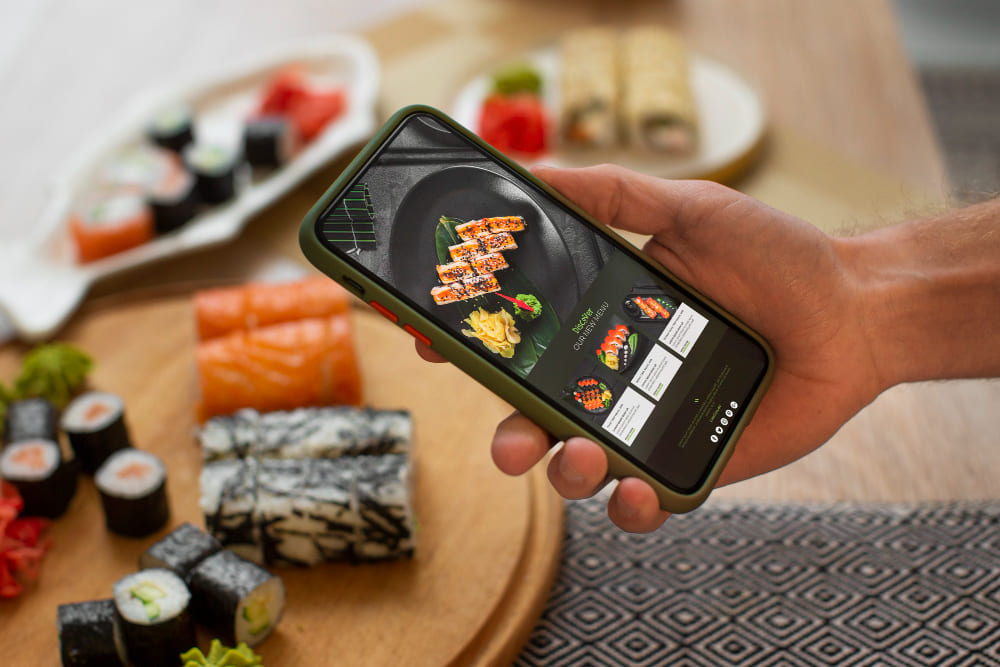
Restaurants should be able to create and update their menus. Food items can include images, descriptions, prices, customization options, and availability status.
Shopping Cart
Customers should be able to add multiple food items to their cart and modify quantities before placing an order.
The cart should clearly display:
- Food price
- Quantity
- Taxes
- Delivery fee
- Discounts
- Total amount
Multiple Payment Options
Integrating multiple payment methods can make the checkout process more convenient.
Depending on the target market, you can integrate:
- Credit and debit cards
- UPI
- Digital wallets
- Net banking
- Cash on delivery
- Other payment gateways
Real-Time Order Tracking
GPS-based order tracking allows customers to monitor their delivery after an order has been accepted.
Push Notifications
Notifications can keep customers, restaurants, and delivery partners updated.
For example:
- Order confirmation
- Restaurant acceptance
- Food preparation
- Delivery assignment
- Order pickup
- Delivery status
- Promotional offers
Ratings and Reviews
Customers can rate restaurants and delivery experiences. Reviews can help users make informed decisions and provide restaurants with feedback.
Coupons and Discounts
The platform can provide promotional tools such as:
- Percentage discounts
- Flat discounts
- First-order offers
- Restaurant-specific coupons
- Referral offers
- Limited-time promotions
UI/UX Design for a Food Delivery App
A food delivery app should have a simple and intuitive interface. Customers should be able to find restaurants and complete an order without unnecessary steps.
Important UI/UX Principles
The application should provide:
- Simple navigation
- Clear restaurant categories
- High-quality food images
- Easy search
- Fast checkout
- Visible delivery information
- Simple payment process
- Accessible order tracking
The checkout process should be particularly straightforward because unnecessary steps can increase cart abandonment.
Technology Stack for Food Delivery App Development
The technology stack depends on the application's requirements, budget, scalability, and target platforms.
Frontend Technologies
Mobile applications can be developed using:
- Flutter
- React Native
- Swift for iOS
- Kotlin for Android
Flutter and React Native can be considered when businesses want cross-platform applications.
Backend Technologies
The backend can be developed using technologies such as:
- Node.js
- Laravel/PHP
- Python
- Java
- .NET
The backend handles users, restaurants, orders, payments, notifications, and other application processes.
Database
Common database technologies include:
- MySQL
- PostgreSQL
- MongoDB
The appropriate database depends on the application's architecture and data requirements.
APIs and Third-Party Integrations
A food delivery platform may require APIs and external services for:
- Maps and GPS
- Payment gateways
- SMS verification
- Push notifications
- Analytics
- Cloud hosting
How Much Does It Cost to Build a Food Delivery App Like Just Eat?
The cost of developing a food delivery app depends on its complexity and required features.
A basic food delivery application may require a lower development budget, while a large marketplace with advanced analytics, real-time tracking, multiple user applications, AI recommendations, and sophisticated administration tools can require significantly more investment.
Major factors affecting development cost include:
- Number of platforms
- UI/UX design complexity
- Number of features
- Backend architecture
- Third-party integrations
- Payment gateway
- GPS and mapping functionality
- Development team location
- Testing requirements
- Maintenance and support
Instead of focusing only on the initial development cost, businesses should also consider hosting, maintenance, security updates, marketing, and future feature development.
How Long Does It Take to Build a Food Delivery App?
Development time depends on the scope of the project.
A basic MVP may take several months, while a feature-rich marketplace can require considerably more time.
The development timeline generally includes:
- Business analysis
- Requirement planning
- UI/UX design
- Frontend development
- Backend development
- API integration
- Testing
- Deployment
- Maintenance
Building an MVP first can help businesses launch faster, collect customer feedback, and add advanced features in later versions.
Security Considerations
Security is essential because food delivery applications process personal information and payment-related data.
Important security practices include:
- Secure authentication
- Data encryption
- Secure APIs
- Role-based access
- Payment security
- Regular security testing
- Secure cloud infrastructure
- Protection against unauthorized access
Businesses should also follow applicable privacy and data protection requirements in their target markets.
Why Choose Professional Food Delivery App Development Services?
Developing a scalable food delivery marketplace requires experience in mobile development, backend architecture, APIs, payment systems, GPS integration, and cloud infrastructure. Working with an experienced development team can help businesses plan the application architecture and implement the required features efficiently.
Professional Food Delivery App Development Services can cover the complete development lifecycle, including UI/UX design, mobile app development, backend development, API integration, testing, deployment, and maintenance. A development partner can also customize the platform according to a company's business model instead of simply creating a generic ordering application.
For startups, an experienced team can help define an MVP and prioritize important features before investing in advanced functionality. Established businesses can build customized systems with restaurant management, delivery operations, analytics, loyalty programs, and integrations.
Testing and Launching the App
Before launching the application, extensive testing should be performed.
Functional Testing
Test registration, restaurant listings, menus, carts, orders, payments, notifications, and delivery workflows.
Performance Testing
Check how the application performs with increasing numbers of users and simultaneous orders.
Security Testing
Identify vulnerabilities in authentication, APIs, payment processing, and user data.
Usability Testing
Real users can test the application to identify navigation and checkout problems.
After testing, the application can be deployed to the relevant app stores and cloud infrastructure.
Tips for Building a Successful Food Delivery App
Consider these points when developing your platform:
Start With an MVP
Launch the core features first instead of building every advanced feature from the beginning.
Focus on User Experience
Make restaurant discovery, ordering, payment, and tracking simple.
Build a Scalable Architecture
The backend should be capable of handling increasing restaurants, customers, orders, and delivery partners.
Optimize Delivery Operations
Efficient delivery assignment and route management can improve the overall customer experience.
Monitor Customer Feedback
Ratings, reviews, support requests, and analytics can help identify areas for improvement.
Conclusion
Building a food delivery app like Just Eat requires a combination of thoughtful business planning, intuitive UI/UX design, reliable technology, and scalable backend infrastructure. The platform should provide dedicated functionality for customers, restaurants, delivery partners, and administrators.
Start by defining your target market and business model, then create an MVP containing essential features such as restaurant discovery, digital menus, cart management, payments, order tracking, notifications, and ratings. Once the platform gains traction, advanced capabilities such as AI recommendations, loyalty programs, scheduled deliveries, and analytics can be added.
With the right development strategy and technology partner, businesses can create a customized food delivery platform that meets their operational requirements and provides a smooth ordering experience.
FAQs
1. How much does it cost to build a food delivery app like Just Eat?
The development cost depends on features, platforms, UI/UX complexity, integrations, development team, and backend architecture. A basic MVP costs less than a feature-rich marketplace with advanced functionality.
2. How long does it take to develop a food delivery app?
A basic MVP can take several months, while a comprehensive food delivery marketplace may take longer depending on the number of features, platforms, integrations, and testing requirements.
3. What features are essential for a food delivery app?
Important features include user registration, restaurant search, menus, cart, online payments, order management, real-time tracking, push notifications, ratings, reviews, coupons, and customer support.
4. Do I need separate apps for customers, restaurants, and delivery partners?
Not necessarily. However, separate interfaces or applications can provide customized functionality for each user group. The final architecture depends on the business model and operational requirements.
5. Which technology is suitable for developing a food delivery app?
Technologies such as Flutter, React Native, Laravel, Node.js, Python, MySQL, PostgreSQL, and cloud services can be used. The ideal technology stack depends on the application's requirements and scalability needs.
6. Can I add AI features to a food delivery app?
Yes. AI can be used for personalized food recommendations, customer behavior analysis, demand forecasting, automated support, and other intelligent features.
7. Can I build a food delivery app for a specific city or country?
Yes. A food delivery platform can be customized for a particular city, region, or country with location-based restaurant listings, local payment methods, currencies, languages, taxes, and delivery operations.