Decentralized Finance (DeFi) is transforming how people access financial services by using blockchain technology, smart contracts, and decentralized applications. Traditional financial systems generally depend on banks, payment providers, and other intermediaries to process transactions. DeFi introduces an alternative approach in which financial activities can be performed through blockchain-based protocols, depending on the platform's design.
In 2026, businesses and startups are exploring DeFi development to build decentralized exchanges, lending platforms, staking applications, liquidity protocols, and digital asset management solutions. These applications can automate financial operations, improve transaction transparency, and make certain financial services accessible through internet-connected devices.
However, developing a successful DeFi platform requires more than deploying a smart contract. Businesses must consider blockchain selection, security audits, token economics, user experience, regulatory requirements, scalability, and ongoing maintenance.
This practical guide explains DeFi development, its essential features, the development process, common use cases, costs, challenges, and future opportunities in 2026.
What Is Decentralized Finance (DeFi)?
Decentralized Finance, commonly known as DeFi, refers to financial applications built on blockchain networks that use smart contracts to execute predefined operations. These applications can provide services such as cryptocurrency trading, borrowing, lending, staking, and liquidity management without relying entirely on traditional financial intermediaries.
Unlike conventional financial applications, DeFi protocols can allow users to interact directly with blockchain-based systems through digital wallets. Transactions and smart contract activity may be publicly verifiable, depending on the blockchain and protocol architecture.
For example, a decentralized lending application can allow users to deposit cryptocurrency into a lending pool. Other users may borrow assets by providing collateral, with the platform's smart contracts managing the conditions of the transaction.
DeFi does not automatically eliminate every intermediary or guarantee financial safety. Many platforms still depend on external services, governance systems, stablecoin issuers, or centralized infrastructure.
Why Is DeFi Development Important in 2026?
DeFi development is attracting interest from fintech companies, blockchain startups, financial service providers, and businesses exploring digital assets. Improvements in blockchain infrastructure and development tools have created more options for building financial applications.
Several factors contribute to this interest.
1. Greater Financial Accessibility
DeFi applications can provide access to specific financial services through a compatible digital wallet and an internet connection. Depending on the platform, users may be able to trade assets, supply liquidity, or participate in lending protocols without opening a traditional brokerage account.
However, access may still be limited by internet availability, transaction fees, local laws, and platform restrictions.
2. Automated Financial Operations
Smart contracts execute programmed instructions when predefined conditions are satisfied. This can automate activities such as calculating collateral ratios, distributing rewards, processing token swaps, and managing lending positions.
Automation can reduce some manual processes, although poorly written contracts may introduce significant financial risks.
3. Transparent Transactions
Public blockchain networks can make transaction histories and smart contract interactions visible to users. This transparency helps developers, analysts, and participants examine protocol activity.
Nevertheless, transparency does not necessarily mean that every project's financial position, governance decision, or off-chain activity is independently verified.
4. New Business Models
Businesses can explore decentralized exchanges, tokenized financial products, liquidity management systems, and blockchain-based payment solutions. These models can create new ways to organize digital financial services, subject to technical and regulatory requirements.
Types of DeFi Applications Businesses Can Develop
Before starting a DeFi project, businesses should identify the financial problem they want to solve and choose an application model that supports their objectives.
1. Decentralized Exchange (DEX)
A decentralized exchange enables users to exchange digital assets through blockchain-based protocols. Many DEX platforms use automated market makers (AMMs), which rely on liquidity pools instead of traditional order books.
Common features include:
- Token swapping
- Liquidity pool management
- Wallet connectivity
- Trading fee calculations
- Transaction history
- Liquidity provider rewards
Businesses developing a DEX must carefully consider liquidity, price slippage, transaction costs, and smart contract security.
2. DeFi Lending and Borrowing Platforms
Lending and borrowing applications allow users to supply digital assets and potentially earn interest while other users borrow assets against collateral.
Typical features include collateral management, interest calculations, liquidation mechanisms, loan monitoring, and asset pool management.
Developers must design reliable collateral valuation systems and liquidation rules to help manage volatility and reduce the risk of undercollateralized loans.
3. Yield Farming and Liquidity Mining Platforms
Yield farming applications enable users to allocate digital assets to supported protocols in exchange for potential rewards. Liquidity mining programs may distribute additional tokens to eligible participants.
Important components include reward calculations, staking contracts, deposit and withdrawal functionality, and transparent reward distribution.
Returns are not guaranteed, and users may experience losses caused by token price fluctuations, impermanent loss, protocol vulnerabilities, or changing incentives.
4. Staking Applications
Staking applications allow users to participate in supported blockchain networks or staking-related protocols. Depending on the implementation, users may delegate tokens, track rewards, and manage staking positions.
Features can include staking dashboards, reward tracking, withdrawal management, validator information, and wallet integration.
Developers must account for network-specific lockup periods, withdrawal rules, validator risks, and applicable tax or compliance considerations.
5. Stablecoin and Payment Solutions
Blockchain-based payment applications can use stablecoins or other digital assets to facilitate transfers and settlements.
Potential features include wallet integration, transaction tracking, supported currency management, payment verification, and reporting tools.
Stablecoin-related applications require particular attention to issuer risk, redemption mechanisms, reserve transparency, and jurisdiction-specific financial regulations.
6. Real-World Asset Tokenization Platforms
Real-world asset (RWA) tokenization involves representing certain rights or interests in assets, such as bonds, commodities, or property-related interests, through blockchain tokens.
Such platforms may need investor verification, ownership records, transfer restrictions, document management, and integration with legal or custody arrangements.
Tokenization does not itself establish legal ownership or guarantee that a token holder can redeem an asset. Legal structures and enforceable rights are essential.
Essential Features of a DeFi Platform
A successful DeFi application combines blockchain functionality with an accessible interface and a carefully designed security architecture.
|
Feature |
Purpose |
|
Crypto wallet integration |
Allows users to connect wallets and approve transactions |
|
Smart contracts |
Automates financial operations according to predefined rules |
|
User dashboard |
Displays balances, transaction records, and positions |
|
Token management |
Supports approved digital assets and related operations |
|
Liquidity management |
Tracks deposits, withdrawals, and liquidity pool activity |
|
Security monitoring |
Helps detect unusual activity and potential vulnerabilities |
|
Analytics and reporting |
Presents transaction information and protocol statistics |
|
Governance functionality |
Enables eligible participants to vote on selected protocol decisions |
|
Notifications |
Communicates transaction status and important protocol events |
|
Admin and monitoring tools |
Support approved operational and incident-response activities |
Not every DeFi application needs every feature. A basic token swap platform may require a different architecture from a lending protocol or an RWA investment platform.
Step-by-Step DeFi Development Process
Developing a decentralized finance application requires structured planning, blockchain engineering, security testing, and operational preparation.
Step 1: Define the Business Model
Start by identifying the financial service the platform will provide. Decide whether the project will focus on decentralized trading, lending, staking, payments, or asset tokenization.
Document the target audience, supported assets, revenue model, operational responsibilities, and user journey.
Potential revenue sources include trading fees, protocol service fees, subscription-based analytics, or fees for specific platform services. Each revenue model should be evaluated for sustainability, user impact, and legal compliance.
Step 2: Research the Market and Requirements
Study comparable platforms, user expectations, technical limitations, and relevant regulations.
Define the project's scope, including:
- Target blockchain ecosystem
- Supported wallets and assets
- Transaction volume expectations
- User onboarding requirements
- Required security controls
- Compliance and reporting obligations
A clear requirements document reduces unnecessary development and helps estimate costs more accurately.
Step 3: Select the Blockchain Network
Blockchain selection influences transaction fees, confirmation times, ecosystem compatibility, developer tooling, and security assumptions.
Common options include Ethereum, Polygon, Arbitrum, Optimism, and BNB Smart Chain.
The choice should be based on the project's specific requirements rather than popularity alone. Developers should evaluate network security, decentralization, liquidity, transaction costs, interoperability, and the risks associated with bridges or external dependencies.
Step 4: Design the UI and User Experience
A DeFi application should make complex financial operations understandable. Users need clear information about fees, expected transaction outcomes, collateral requirements, and potential risks.
Design the dashboard, wallet connection process, asset pages, transaction confirmations, and error messages before beginning full-scale implementation.
A well-designed interface should also help users distinguish between a transaction that has been submitted, one that has been confirmed, and one that has failed.
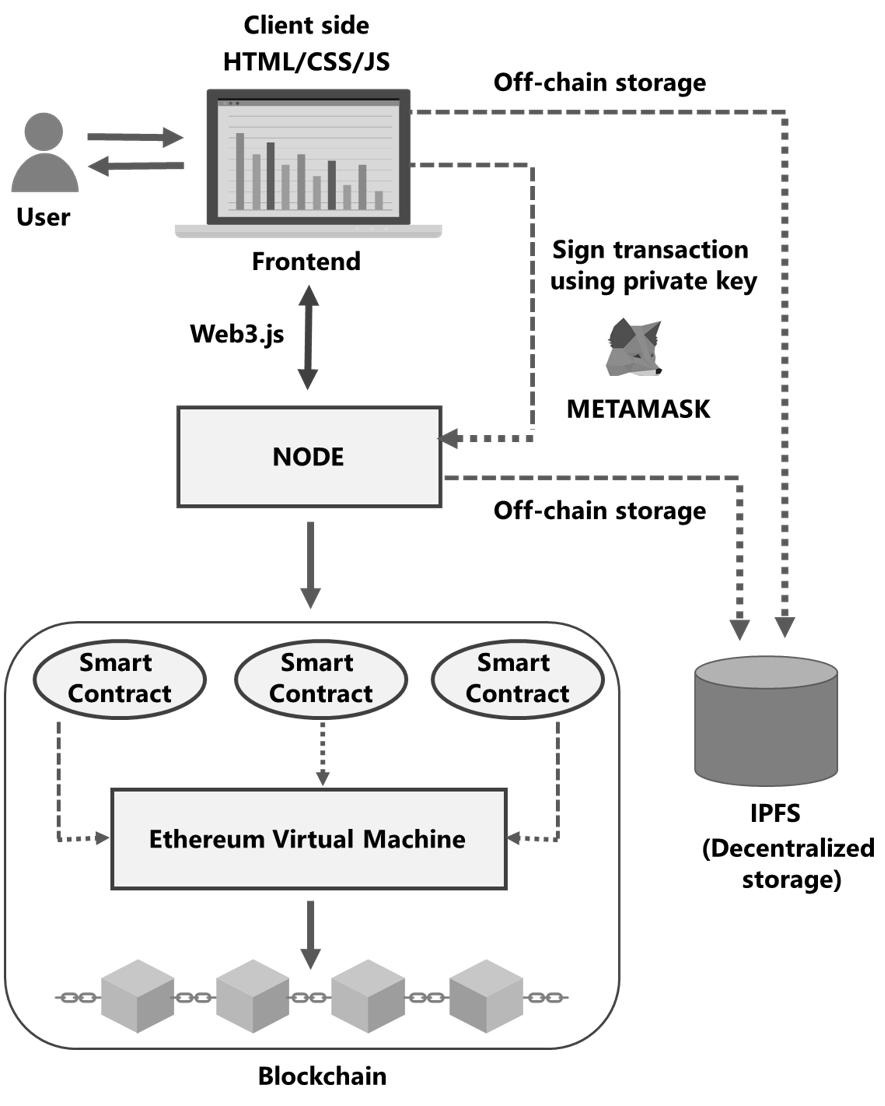
Step 5: Develop the Smart Contracts
Smart contracts implement the core financial logic of a DeFi protocol.
Depending on the application, contracts may handle token transfers, liquidity pools, collateral calculations, staking rewards, fee distribution, or governance voting.
Solidity is widely used for Ethereum-compatible networks. Other blockchain ecosystems may require different programming languages and development tools.
Developers should use established libraries where appropriate, implement access controls, validate inputs, and consider emergency procedures without creating unnecessary centralized control.
Step 6: Integrate Wallets and Blockchain Data
Wallet integration enables users to connect accounts, review transaction details, and authorize blockchain operations.
The frontend may use blockchain libraries and node-provider services to communicate with the selected network. Indexing services can help retrieve transaction histories and present complex blockchain data efficiently.
Private keys and seed phrases should never be collected through ordinary application forms. Wallet security and transaction signing must follow established practices.
Step 7: Conduct Testing and Security Audits
Testing is one of the most important stages of DeFi development because contract vulnerabilities can expose digital assets to financial loss.
The testing process should include:
- Unit testing for individual contract functions
- Integration testing across platform components
- Automated vulnerability analysis
- Fuzz testing and invariant testing
- Economic and financial attack simulations
- Independent smart contract audits
- Frontend and wallet security testing
For high-value protocols, additional measures may include formal verification, bug bounty programs, continuous monitoring, and carefully controlled deployment procedures.
A security audit reduces risk but cannot guarantee that a platform is completely secure.
Step 8: Deploy and Monitor the Platform
Begin with deployment to a development network or test environment. Validate contract behavior, transaction handling, integrations, and operational procedures before mainnet deployment.
After launch, monitor transaction failures, unusual activity, protocol utilization, liquidity conditions, and system availability.
The team should have a documented incident-response plan, upgrade policy, backup procedures, and communication process for security events.
Step 9: Maintain and Improve the Application
DeFi development continues after launch. Blockchain networks evolve, dependencies receive updates, and market conditions change.
Ongoing maintenance may include performance improvements, contract upgrades where supported, dependency updates, monitoring, security reviews, and feature development.
Any upgrade mechanism should be clearly documented because upgrade permissions can affect user trust and the protocol's decentralization.
Technology Stack for DeFi Development in 2026
Choosing the right technology stack depends on the blockchain, application type, expected usage, and security requirements.
|
Technology |
Common application |
|
Solidity |
Smart contracts on Ethereum-compatible networks |
|
Rust |
Smart contracts and blockchain programs in supported ecosystems |
|
React.js / Next.js |
Web application frontend |
|
Node.js |
Backend APIs and application services |
|
PostgreSQL |
Application metadata and off-chain records |
|
Web3 libraries |
Wallet connectivity and blockchain interaction |
|
Blockchain indexers |
Transaction history and on-chain data retrieval |
|
Cloud infrastructure |
Hosting, monitoring, and supporting services |
|
Security analysis tools |
Smart contract testing and vulnerability detection |
A DeFi application does not necessarily require a conventional backend for every financial operation. However, backend services may be useful for notifications, analytics, indexing, administrative functions, and user support.
Developers should distinguish between blockchain-based financial logic and off-chain application services to avoid unnecessary complexity.
How Much Does DeFi Development Cost in 2026?
The cost of developing a DeFi platform depends on its complexity, blockchain ecosystem, security requirements, integrations, and development team's experience.
The following figures are illustrative planning estimates in Indian rupees, not verified market averages or fixed quotations.
|
Development level |
Estimated budget |
|
Basic DeFi prototype |
₹5 lakh–₹12 lakh |
|
Mid-level DeFi application |
₹12 lakh–₹30 lakh |
|
Advanced DeFi platform |
₹30 lakh–₹60 lakh |
|
Complex financial protocol |
₹60 lakh or more |
Factors That Affect Development Costs
1. Application complexity: A simple staking dashboard has different requirements from a decentralized exchange or lending protocol with automated liquidations.
2. Smart contract development: Complex financial logic, tokenomics, governance, and upgrade mechanisms can increase engineering time.
3. Security audits: Independent audits, additional testing, and formal verification can require a substantial separate budget.
4. Blockchain integration: Supporting multiple networks, cross-chain functionality, or external data services increases development and maintenance requirements.
5. UI/UX design: Financial dashboards need understandable transaction flows, clear fee information, and reliable error handling.
6. Third-party services: Wallet providers, node services, analytics tools, and monitoring infrastructure may introduce ongoing costs.
7. Maintenance: Post-launch security reviews, infrastructure, technical support, and software updates should be included in the long-term budget.
For an accurate estimate, businesses should define the required features and obtain separate estimates for development, audits, deployment, and ongoing maintenance.
Security Challenges in DeFi Development
DeFi applications can manage valuable digital assets, which makes security a core architectural requirement rather than an optional final step.
Smart Contract Vulnerabilities
Coding errors, incorrect access controls, reentrancy vulnerabilities, and flawed financial calculations can create opportunities for attackers.
Possible safeguards: Use established development libraries, follow secure coding practices, conduct automated testing, and obtain independent audits.
Oracle Manipulation
Some protocols rely on external price feeds to determine collateral values, liquidation thresholds, or asset exchange rates. Manipulated or delayed data can lead to incorrect financial decisions.
Possible safeguards: Use appropriately designed oracle systems, evaluate data sources, apply circuit breakers where suitable, and test abnormal market scenarios.
Flash Loan Attacks
Flash loans allow users to borrow and repay assets within a single blockchain transaction under specified conditions. Attackers may exploit weaknesses in price calculations, governance mechanisms, or protocol accounting.
Possible safeguards: Test economic assumptions, avoid relying on manipulable spot prices, and examine how temporary liquidity changes affect protocol behavior.
Private Key and Wallet Risks
Users may lose access to funds through phishing, compromised devices, malicious approvals, or unsafe key management.
Possible safeguards: Provide clear transaction information, use secure signing practices, explain token approvals, and offer guidance on wallet safety.
Regulatory and Compliance Risks
Depending on the jurisdiction, a DeFi business may encounter requirements related to financial services, anti-money-laundering controls, sanctions, consumer protection, privacy, securities, taxation, or custody.
Possible safeguards: Obtain jurisdiction-specific legal advice, assess the project's actual activities and control structure, and design appropriate compliance procedures before launch.
Why Choose HybridPlus Infotech for DeFi Development?
Businesses planning to develop a decentralized finance application need a development partner that understands software architecture, user experience, integrations, and security-conscious engineering. HybridPlus Infotech can be considered for discussing custom software development requirements for blockchain-oriented business projects.
A DeFi project generally requires a structured development process, starting with business analysis and technical planning before moving into interface design, application development, testing, and deployment. The development scope may include user dashboards, wallet connectivity, blockchain integrations, transaction history, administrative tools, and supporting backend services, depending on the chosen architecture.
For projects involving smart contracts and financial assets, businesses should also establish a separate security review process, including independent smart contract audits where appropriate. Technical documentation, testing procedures, maintenance planning, and clear communication are important throughout development.
Before selecting a development partner, review relevant portfolio examples, technical capabilities, delivery milestones, security practices, support arrangements, and project estimates. A clearly defined scope helps align the development team with business objectives and the application's long-term operational requirements.
Final Words
Decentralized finance development offers businesses opportunities to build blockchain-based financial applications for trading, lending, staking, payments, and digital asset management. In 2026, developing these applications requires a combination of blockchain engineering, financial logic, user-friendly interfaces, security testing, and regulatory awareness.
The development process should begin with a clearly defined business model and suitable blockchain architecture. From there, businesses can plan essential features, implement smart contracts, integrate wallets, conduct independent security reviews, and deploy the application with ongoing monitoring.
Cost and delivery timelines vary significantly according to complexity and risk. Rather than focusing exclusively on rapid deployment, businesses should prioritize reliable financial logic, transparent user interactions, thorough testing, and sustainable maintenance.
With careful planning and an appropriate technical approach, organizations can evaluate DeFi solutions that address specific financial needs while managing the technical, operational, and regulatory challenges associated with decentralized applications.
FAQs
1. What is DeFi development?
DeFi development is the process of building blockchain-based financial applications using smart contracts, digital wallets, and decentralized protocols. Common examples include decentralized exchanges, lending platforms, staking applications, and tokenization solutions.
2. How long does it take to develop a DeFi platform?
A basic prototype may take approximately 6–12 weeks, while a medium-complexity platform may require 3–6 months. Advanced financial protocols can take 6–12 months or longer, depending on integrations, security testing, and regulatory requirements. These are indicative planning ranges, not guaranteed delivery timelines.
3. Which blockchain is suitable for DeFi development?
Ethereum, Polygon, Arbitrum, Optimism, and BNB Smart Chain are among the options developers may evaluate. The appropriate network depends on transaction costs, security assumptions, ecosystem liquidity, tooling, scalability, and the project's specific requirements.
4. How much does it cost to build a DeFi application?
A basic prototype may cost approximately ₹5 lakh–₹12 lakh, while more advanced applications can cost ₹30 lakh–₹60 lakh or more. Smart contract audits, infrastructure, integrations, and ongoing maintenance may require additional budgets.
5. Is DeFi development secure?
DeFi applications can be developed with security controls such as code reviews, automated testing, smart contract audits, monitoring, and incident-response procedures. However, no development process or audit can eliminate every vulnerability, economic attack, or third-party risk.
6. What programming languages are used for DeFi development?
Solidity is widely used for smart contracts on Ethereum-compatible networks, while Rust is used in several other blockchain ecosystems. JavaScript or TypeScript is commonly used for frontend applications and blockchain integrations.
7. Can businesses generate revenue from DeFi applications?
Potential revenue models include transaction fees, protocol service fees, subscriptions, and fees for specific financial services. Actual revenue depends on user demand, liquidity, operating costs, market conditions, competition, and applicable regulations. Revenue is not guaranteed.
8. What is the difference between DeFi and traditional finance?
Traditional finance generally operates through institutions such as banks, brokers, and payment providers. DeFi uses blockchain protocols and smart contracts to automate certain financial activities. Both approaches have risks, and DeFi applications may still depend on centralized services or external organizations.