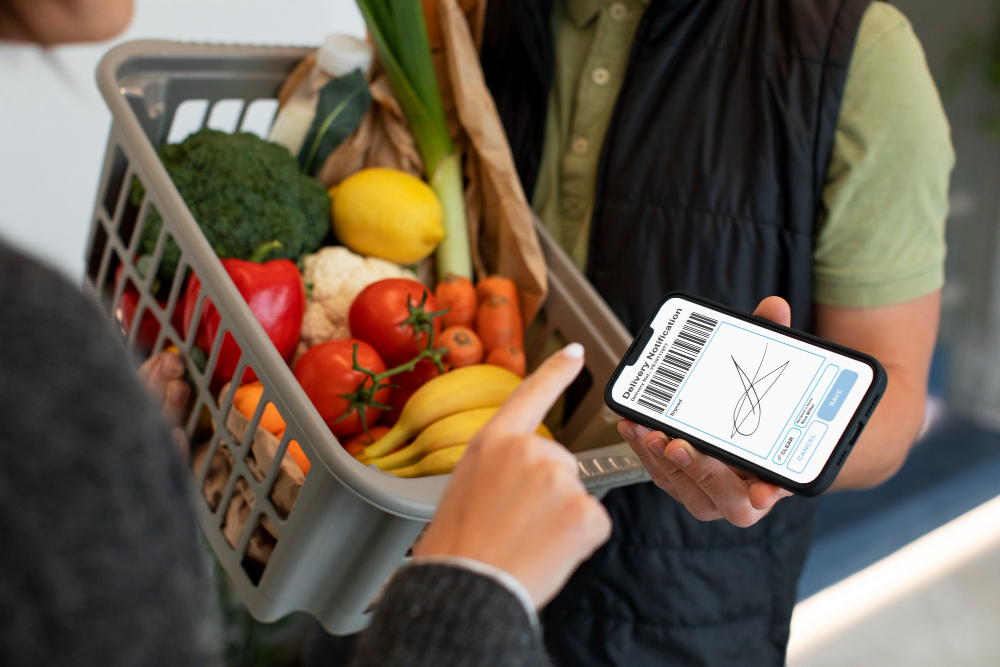
Online grocery shopping has changed how people purchase everyday essentials. Customers can now browse products, compare prices, select delivery slots, and receive groceries at home through mobile applications. This growing demand has created opportunities for startups, supermarkets, and entrepreneurs interested in launching their own grocery delivery platforms.
One popular example is Instacart. Its business model connects customers with grocery retailers and shoppers who help fulfill orders. Businesses planning to enter this market often want to understand the investment required to develop a similar application.
In this guide, we will explore the major cost factors, essential features, technology options, development stages, and strategies for managing your grocery delivery app budget.
What Is an App Like Instacart?
An Instacart-style application allows customers to order groceries online from supermarkets, local stores, and other participating retailers. Depending on the business model, customers can choose home delivery or pickup, while stores and delivery personnel manage order fulfillment.
A complete platform generally includes three main components:
- Customer application: Enables users to discover products, place orders, make payments, and track deliveries.
- Store or shopper application: Helps retailers manage inventory and orders, while shoppers handle product selection and fulfillment.
- Admin dashboard: Allows the business owner to monitor transactions, manage users, resolve complaints, and review operational performance.
Some platforms also provide a separate delivery partner application. The number of applications and the complexity of their interactions can significantly affect development costs.
Here is the Cost to Develop an App Like Instacart
The overall budget depends on whether you need a basic grocery ordering solution or a sophisticated platform with multiple retailers, real-time delivery tracking, and automated inventory synchronization.
Basic grocery delivery MVP
15,000–30,000
Core shopping, checkout, order management, and basic administration.
Mid-level grocery delivery app
30,000–70,000
Advanced search, delivery tracking, offers, and store management.
Advanced Instacart-style platform
70,000–150,000+
Multi-store operations, complex logistics, integrations, and scalable infrastructure.
These estimates can vary with the development team's location, the number of platforms, third-party services, and testing requirements. A highly customized enterprise solution may cost considerably more.
Key Features That Influence Development Cost
Features determine how customers interact with your platform and how efficiently your business processes orders. The following are the major components to consider.
1. Customer Registration and User Profiles
Customers should be able to register, log in, manage delivery addresses, and save their preferences. You can also include order history, favorite products, and saved shopping lists to make repeat purchases easier.
Social login or additional authentication methods may increase implementation effort. A simple, secure sign-in experience is usually sufficient for an initial version.
2. Grocery Catalog and Smart Search
A well-organized product catalog helps customers find groceries without unnecessary effort. Categories, product images, descriptions, prices, availability, and quantity options are essential.
Search filters, personalized recommendations, barcode scanning, and advanced sorting can be introduced as the platform matures. The complexity of catalog management increases when multiple retailers maintain separate inventories.
3. Shopping Cart and Secure Checkout
The cart should allow customers to update quantities, remove products, review totals, and apply eligible discounts.
Checkout functionality may include delivery addresses, taxes, delivery fees, estimated arrival times, and multiple payment options. Payment gateway integration, refund handling, and transaction reconciliation should also be considered in the budget.
4. Order Tracking and Delivery Management
Customers appreciate knowing whether their order is confirmed, being prepared, or out for delivery. Real-time GPS tracking can provide more precise delivery updates.
This feature may require location services, mapping APIs, delivery partner applications, and backend systems that coordinate order status. Consequently, it can add significant development and ongoing API expenses.
5. Store and Shopper Management
Retailers need tools to update product availability, process orders, and manage substitutions when items are out of stock.
If your platform uses personal shoppers, their application may include order assignments, shopping lists, item replacement requests, delivery instructions, and earnings summaries.
6. Admin Dashboard and Analytics
An administrative panel helps you manage customers, stores, shoppers, promotions, refunds, and order disputes.
Reporting features can display sales trends, average order value, delivery performance, and frequently purchased products. Advanced dashboards and automated business reports may require additional development time.
Other Factors That Affect the Budget
Beyond the visible features, several technical and business decisions influence the total investment.
- Android and iOS development: Building for both platforms may require additional design, testing, and maintenance. Cross-platform development can reduce duplicated effort in suitable projects.
- Third-party integrations: Maps, payment gateways, SMS services, push notifications, and retailer inventory systems may involve setup fees or recurring charges.
- UI/UX design: Custom interfaces and extensive usability testing increase initial costs but can improve the shopping experience.
- Security and scalability: Secure payment handling, access controls, monitoring, and reliable infrastructure are particularly important as order volumes grow.
- Maintenance: Bug fixes, operating system updates, feature improvements, hosting, and technical support continue after launch.
Technology Stack for a Grocery Delivery App
The right technology stack should support dependable ordering, efficient inventory updates, and future expansion.
A possible setup includes Flutter or React Native for cross-platform mobile applications, Laravel or Node.js for backend development, and PostgreSQL or MySQL for structured data. Cloud infrastructure can support application hosting, monitoring, backups, and scaling.
Mapping and location services can support delivery estimates, while payment providers handle transactions. The final selection should depend on your team's expertise, expected traffic, integration requirements, and operating budget.
How to Build an App Like Instacart Step by Step
A planned development process reduces the risk of spending money on features that customers do not need.
Step 1: Research your market. Identify your target customers, delivery locations, competitors, grocery categories, and pricing strategy.
Step 2: Define the business model. Decide whether you will serve one supermarket, multiple retailers, or independent grocery stores. Revenue could come from delivery charges, retailer commissions, subscriptions, or a combination of models.
Step 3: Select MVP features. Begin with product browsing, cart management, checkout, order status, and basic store administration. Add advanced tracking and personalization when there is a clear business need.
Step 4: Design and develop the platform. Create user-friendly screens and build the customer, store, delivery, and administrative workflows required by your chosen model.
Step 5: Test before launch. Check payment processing, inventory accuracy, order cancellations, substitutions, location permissions, and performance across supported devices.
Step 6: Launch in a limited area. Starting in one neighborhood or delivery zone can help you understand order demand and operational challenges before expanding to additional locations.
Why Consider HybridPlus Infotech for Grocery Delivery App Development?
Building a grocery delivery platform requires a development partner that understands how customer shopping, product inventory, payment processing, and order fulfillment work together. HybridPlus Infotech provides customized software and mobile application development services for businesses seeking solutions tailored to their operational needs.
For an Instacart-inspired project, the development scope can include customer-facing applications, store management tools, delivery workflows, and an administrative dashboard. Additional functionality, such as GPS-based delivery tracking, promotional campaigns, inventory synchronization, and reporting, can be planned according to your budget and launch objectives.
A requirement-focused approach helps identify which features should be included in the first release and which can be introduced later. This makes it easier to manage development priorities while leaving room for future expansion.
Before beginning the project, define your target market, preferred platforms, retailer requirements, delivery process, and expected order volume. HybridPlus Infotech can use these requirements to help establish a practical project scope and development roadmap for your grocery delivery business.
Closure
The cost to build an app like Instacart depends on your business model, feature requirements, technology stack, and operational complexity. A basic grocery delivery MVP may be achievable with a comparatively modest investment, while a multi-store platform with real-time logistics and advanced integrations requires a larger budget.
Rather than copying every feature from an established platform, focus on solving the main problems faced by your customers and retail partners. Launch with essential functionality, gather feedback, and expand based on real usage. This approach helps you control initial costs while building a grocery delivery business that can grow over time.
Frequently Asked Questions
1. How much does it cost to build an app like Instacart?
A basic MVP may cost 15,000–30,000, a mid-level solution 30,000–70,000, and an advanced platform 70,000–150,000 or more. Actual pricing depends on the project scope and development requirements.
2. How long does it take to develop a grocery delivery app?
A basic version may take approximately 3–5 months, while a feature-rich platform can require 6–12 months or longer. Integrations, testing, and inventory workflows influence the timeline.
3. What features are essential for a grocery delivery app?
Essential features include user registration, product catalogs, search, shopping carts, checkout, order management, notifications, and an admin dashboard. Delivery tracking and retailer integrations depend on the chosen business model.
4. Can I build a grocery delivery app for Android and iOS?
Yes. You can develop native applications for each platform or use cross-platform technologies such as Flutter and React Native. The right approach depends on your budget and technical requirements.
5. How does an Instacart-like app make money?
Potential revenue sources include delivery fees, retailer commissions, subscriptions, service charges, and promotional placements. The appropriate model depends on local competition, customer expectations, and operating costs.
6. What are the ongoing costs after launching the app?
Recurring expenses may include hosting, maintenance, security updates, customer support, mapping APIs, payment processing, messaging services, and further development. These costs depend on usage volume and the services integrated into the application.